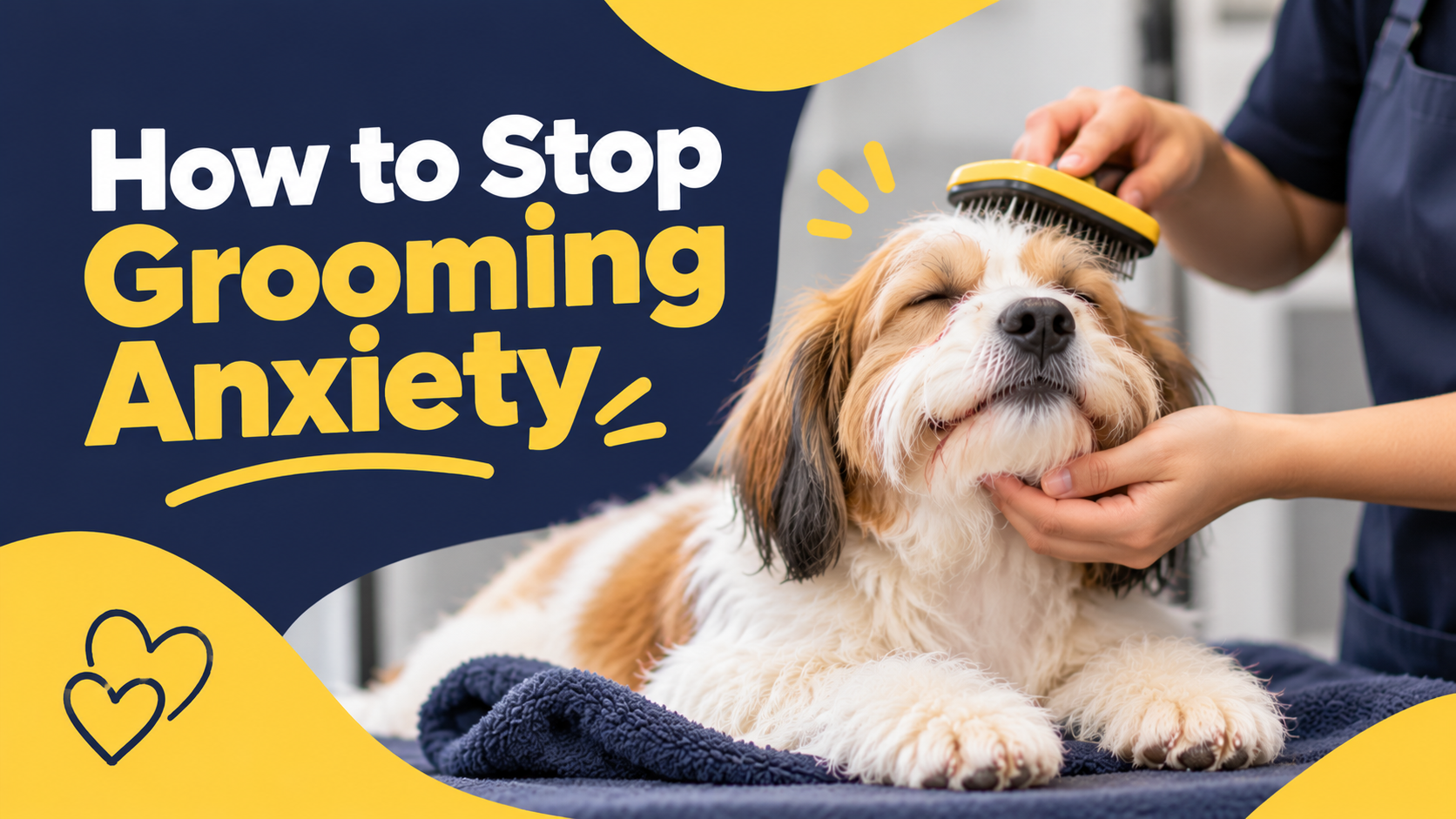
For many dogs, hearing the bathroom tap run or seeing a pair of nail clippers triggers instant panic: trembling, hiding under the bed, or snapping in self-defense.
Grooming does not have to be a battle. Dogs are not naturally "difficult" during grooming—they simply feel overwhelmed by strange sounds, slippery surfaces, and invasive handling. With structured desensitization, grooming can become a calming, positive bonding experience.
Action Checklist: Fear-Free Grooming
Start at Home: Practice handling paws, ears, and tails for 2 minutes daily during calm cuddle sessions.
Sound First, Action Second: Familiarize your dog with hair dryers and trimmer vibrations from across the room before using them directly.
Lick Mats are Magic: Use suction-cup silicone lick mats smeared with peanut butter or wet food on bathroom tiles to keep your dog happily distracted.
1. Why Do Dogs Develop Grooming Anxiety?
Understanding the root cause of your dog’s fear makes it easier to fix:
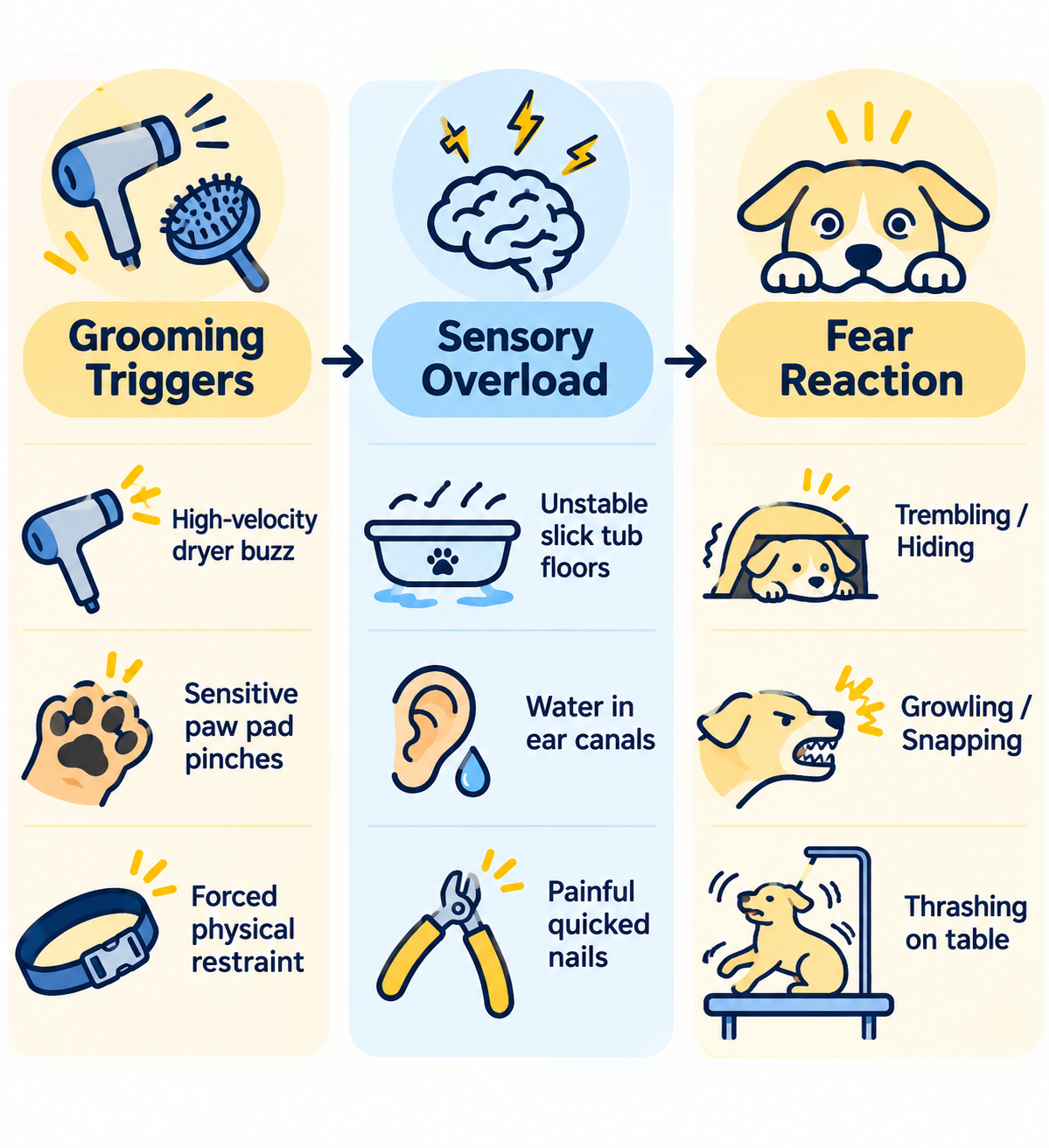
When a dog has a single painful experience—such as having their nail quick cut too short or getting water trapped deep in their ear—they develop an associative fear response to the entire grooming salon environment.
2. Step-by-Step Tool Desensitization Framework
Do not rush into a full grooming session immediately. Break the process down into low-stress, bite-sized micro-steps:
Phase 1: Paw & Nail Handling (Days 1–7)
Touch your dog's paw pad for 2 seconds while feeding a high-value treat (like boiled chicken), then release.
Hold the paw and gently press each individual toe pad. Reward immediately.
Bring the nail clipper into view without clipping anything. Tap the metal handle gently against their nail, feed a treat, and put the tool away.
Clip just one single nail tip per day, ending the session on a high note.
Phase 2: Bath & Water Desensitization (Days 8–14)
Place a non-slip rubber mat inside your empty bathroom or tub so your dog feels physically stable.
Smear dog-safe peanut butter or curd on a wall-mounted lick mat.
Let your dog walk in voluntarily and lick the treat while the water is completely turned off.
Gradually turn on lukewarm water at low pressure, washing only their paws and legs before moving up the body.
Phase 3: Dryer & Vibration Acclimation (Days 15–21)
Turn on a human hair dryer on its lowest, coolest setting in an adjacent room while offering your dog dinner.
Slowly bring the dryer closer over several days, rewarding calm body language.
Direct airflow onto their back and legs (never directly at their face or into ears) for 10 seconds at a time.
Connect with Certified Fear-Free Groomers on Doffair: Anxious pets deserve gentle, patient handlers. Use the Doffair App to filter for verified groomers experienced in fear-free handling, book in-home grooming services, and connect with trusted trainers in your area.
3. Signs Your Dog Is Reaching Their Stress Limit
Watch for these early warning signs during a grooming session. If you observe two or more of these signals, pause the session and give your dog a 15-minute decompression break:
Somatic Signs: Rapid lip-licking, wide yawning, stiffening body posture, and "whale eye" (showing the white outer ring of the eyeball).
Vocal & Physical Resistance: Whining, pulling paws back forcefully, or attempting to leap off the grooming table/tub.
Defensive Escalation: Low growling, lip curling, or snapping when tools approach sensitive areas (paws, ears, or sanitary zones).
Things Pet Parents Ask Us Most
What should I do if my dog snaps when I try to trim their nails?
Stop immediately. Snapping is a clear sign that your dog has exceeded their stress threshold. Switch to a scratchboard (where the dog files their own nails by scratching for treats) or work with a fear-free professional groomer.
At what age should a puppy have their first professional grooming appointment
Puppies should visit a grooming salon around 12 to 16 weeks of age (after completing their core vaccination series). This initial visit should be a gentle "puppy introduction"—a light bath, brush, ear check, and nail trim, loaded with treats and positive reinforcement.
Should I sedate my dog for grooming sessions?
Sedation should always be a last resort under veterinary supervision for severely reactive or traumatized pets. Most grooming anxiety can be resolved using gradual desensitization, non-slip mats, lick treats, and patient handlers.